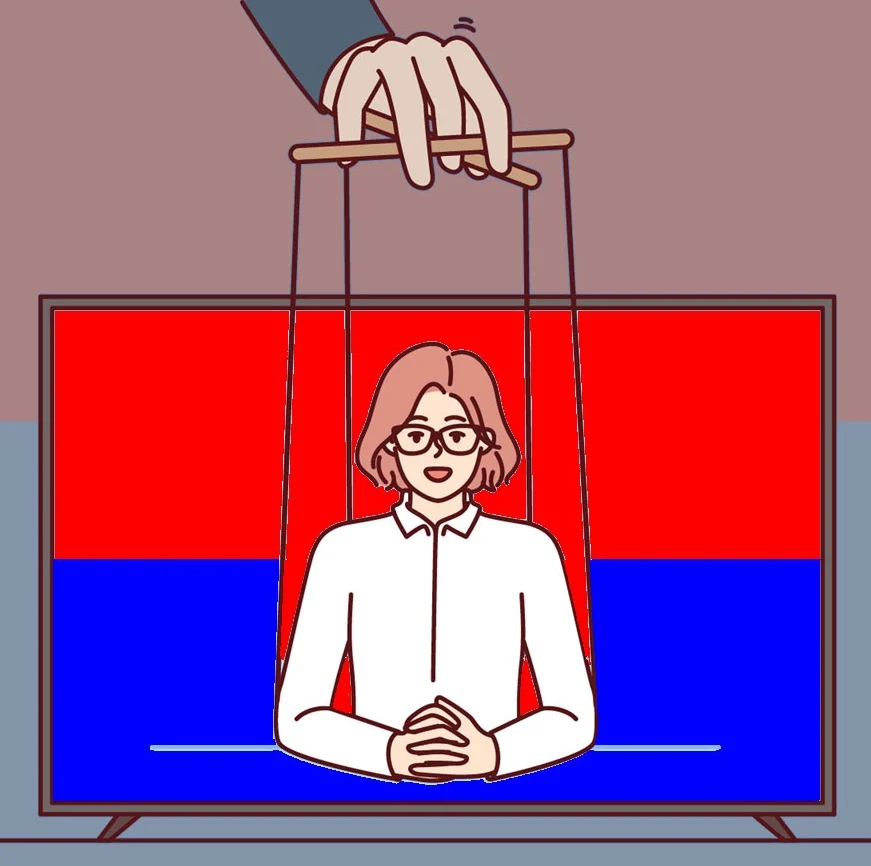
Red-Blue Divide: The Manufactured Narrative
The rhetoric promoted by Gingrich and Luntz struck a nerve outside of the country’s political and economic centers. With Republicans up and down the line following the talking points given them, and conservative talk radio and Fox News and the mainstream media serving as echo chambers, the contrast that Gingrich sought for the culture war took root. The red-blue divide became our national narrative.
Paul Farhi, a staff writer for The Washington Post, was among the first to recognize the emergence of the red-blue paradigm being used to describe the relationship between Republicans and Democrats. He believed it to be a caricature of the two parties’ worldviews that exaggerated what divided them. Later studies suggest he was right.
As Paul Farhi of the Washin
Despite substantial evidence to the contrary, Republicans – aided by the news media – had convinced most Americans that there were no shades in between red and blue. Wedge issues designed to provide contrast between candidates now irreconcilably separated the parties. The problems themselves were not partisan, but Gingrich, Luntz, and their protégés in the party so framed the issues that they became weapons in their rhetorical arsenal.
Divided by a gulf filled with misconceptions on abortion, climate change, healthcare, election security, economic inequality, and immigration – misconceptions largely manufactured and promoted by Gingrich and Luntz – Americans, even the more centrist ones, found themselves caught in partisan warfare that would only grow meaner, nastier, and more threatening in the years to come.