| Problem Addressed | Immigration and Asylum |
| Solution | Runs a program designed to help Dayton’s immigrant and refugee population better integrate into their community |
| Location | Dayton, OH |
| Impact | Local |
What she’s done
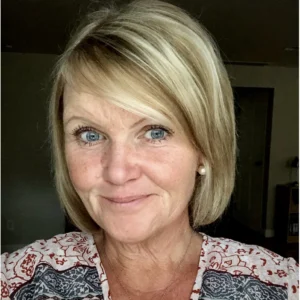
As the program coordinator for Welcome Dayton, Jeannette Horwitz works with all facets of city life — schools, libraries, businesses, fire and police departments, places of worship, and her colleagues in the city government — to make it easier for immigrants and refugees to integrate into the community. She facilitates the availability of legal services and job search resources, develops leadership training programs, and is the focal point for introducing business opportunities to foreign-born entrepreneurs. She also oversees the city’s language access policy, ensuring that people with limited English proficiency or who are hearing or visually impaired are provided interpretive or translation services when engaging with city services (e.g. the courts, public hospitals, business licensing).
Horwitz is also a peer auditor for Welcoming America, a national organization that promotes immigrant inclusivity as a pathway to prosperity. Welcoming America offers Certified Welcoming recognition to communities that meet its standards for assisting and engaging immigrants. Dayton was first certified as a Welcoming Community in 2017, and Horwitz, in her role as Welcome Dayton’s program coordinator, is responsible for ensuring the city retains its certification. As a peer auditor, Horwitz evaluates other communities for their Welcoming certification.
In addition, through regular meetings with her peers in the Welcoming Network, she learns of and shares new ideas and practices developed in communities around the country that enable immigrants to become more productive members of their adopted hometowns.
Her story
Horwitz was familiar with Welcome Dayton long before she went to work for the city program in 2021. As an instructor at Wright State University in Dayton, she taught English to international students in the Learning English for Academic and Professional Purposes program (LEAP). Soon after the Welcome Dayton program was launched, she was asked to develop LEAP for Locals, a reduced-fee program for teaching English to immigrants and refugees in the local community. Over the ensuing years, she came to know many immigrants and refugees and understand the challenges they faced.
Horwitz is herself an immigrant. Born and raised in Sweden, she first came to the US in 1987 as a 15-year-old high school student on a summer study abroad program in New Jersey. She returned a year later, this time to California for a year-long Rotary Youth Exchange program. Then, she arrived in Ohio for what she thought would be just a year of study at the University of Cincinnati that instead turned into a lifetime.
At the time, Horwitz never intended to leave her family in Sweden. She came to Cincinnati for her freshman year, but found she enjoyed being challenged at the university and decided to stay and complete her degree there. As opportunities and challenges — and love — continued to cross her path, she says, “The years just kind of rolled on. I ended up getting married and having a family and … stayed.”
After graduating in 1997 with a BA in English language and literature, she obtained a master’s degree in TESOL (Teaching English to Speakers of Other Languages) in 2000 from Wright State University in Dayton and then ended up teaching there for the next 20 years. She also married an American, obtained permanent residency status, and started a family. As her children grew, she recognized the depth of her American roots and decided she wanted to be a US citizen, in part so she could have a voice in her children’s future. She was naturalized in 2012, in time to vote in the elections that year. She remembers being excited to vote for the first time.
The first Trump presidency, and especially his Muslim ban in 2017, placed a strain on Welcome Dayton and the students Horwitz was teaching, making her job a little harder. Then came COVID, which, in Horwitz’s view, negatively altered the teaching dynamic, as it went from in-person to online.
She began to consider what other work she might want to do and remembers thinking, “If ever I’m going to do something different, then if Welcome Dayton has an opening, I’d be interested.”
As in her early years in the country, opportunity found her — an opening for the coordinator position at Welcome Dayton — and she seized it.
“Baptism by Fire”
Horwitz described her first days on the job as a “baptism by fire”. As the new program coordinator for Welcome Dayton, her first task was to complete the application to recertify as a Welcoming Community. That meant acquiring information from her government colleagues and the program’s partners to address the 103 requirements listed in the original Welcoming Standard. Those requirements spanned seven categories:
- Government Leadership
- Equitable Access
- Civic Engagement
- Connected Communities
- Education
- Economic Development
- Safe Communities
Horwitz had to collect a lot of detailed information relating to such areas as community representation in government staffing, immigrant access to healthcare and information about business, job, and community engagement opportunities, and the range of partnership programs designed to strengthen ties between immigrant residents and US-born citizens. She was concerned that her new colleagues and partners might not trust her with the information she needed from them.
So, her first assignment turned out to be a crash course both in relationship building and the program’s scope and structure.
Horwitz navigated the situation successfully, and the program was recertified in 2022. Now, four years later, she gets to do it all over again, though this time she has 106 criteria spread across the same seven categories and five new tiers defined in an upgraded Welcoming Standard 2.0. (“Government Leadership” has been expanded to “Government and Community Leadership”.)
In between recertifications, Horwitz oversaw the blossoming of Dayton’s Global Artisan Market, the product of a partnership between Welcome Dayton and the 2nd Street Market, the city’s popular farmer’s market. 2nd Street’s organizers had approached Horwitz about developing a showcase for the talents of immigrant artists and entrepreneurs and their cultural heritage. Artisans were given space to show and sell their goods as well as training on how to table (i.e. to set up a table, display their wares, and more) and price them. The result has been a twice-a-year event in which different members of the immigrant community are invited to share and sell their wares — from handcrafted toys to baked goods, each reflecting the cultural heritage of the maker’s homeland.
Horwitz says the market has grown each year, and now, in its fifth year, she is fielding a request for a third event in a larger venue. She noted that, as enticing as the opportunity might be, she needed to make sure the new event would not diminish the other two.
Horwitz also oversees Welcome Dayton’s participation in the New Americans Art Exhibit, a showcase of immigrant art held at the city library. It’s another opportunity to introduce long-time residents to the different cultures that their new neighbors hail from.
She is particularly proud of — and inspired by — the participation of many locally-born residents who volunteer to support these efforts, from help with the framing of artwork to the design of promotional flyers and advertisements to training these cultural ambassadors on how to table and price their goods.
The Welcome Dayton Program
Welcome Dayton emerged as a solution to decades of declining population and job loss in Dayton. In 2011, Thomas Wahlrab, executive director of the City of Dayton’s Human Relations Council, spearheaded a series of conversations with more than 85 members of the community who chose to embrace the city’s growing immigrant population with the Welcome Dayton Plan. Its stated objective was “to become a nationally recognized Immigrant Friendly City.”
Formally proposed by Mayor Gary Leitzell (I) and passed by the City Commission in October that year, Welcome Dayton very quickly achieved national — and even international — recognition. Early results cited by the American Immigration Council suggest the program was succeeding: foreign-born residents were more than twice as likely to start a new business in Dayton than native-born citizens and had contributed more than $15 million in state and local taxes.
In 2013, Wahlrab, as principal architect of the Welcome Dayton Plan, was honored as a Champion of Change by the Obama White House.
In explaining the plan, Wahlrab wrote, “The Welcome Dayton Plan is designed to enhance the potential of Dayton as a competitor in the global economy by attracting immigrants who bring new ideas, new perspectives, new resources and new talent to our workforce.”
Now in its 15th year, Welcome Dayton became Welcoming America’s first Certified Welcoming Community in 2017. In the context of the country’s immigration and asylum laws, which offer foreign-born people a path to residency and citizenship, local programs like Dayton’s provide a needed bridge to reduce the many obstacles that limit immigrant and refugee assimilation. Welcoming America adds an important layer of coordination and visibility to these programs.
Today, Welcoming America recognizes 45 Certified Welcoming Communities in 22 states, including four others in Ohio — the cities of Cuyahoga Falls and Toledo, Cuyahoga County, and Lucas County. Its Welcoming Network includes more than 300 local governments and nonprofits.
Neighboring Springfield, subject of the hateful lie during the 2024 presidential campaign about immigrants eating cats and dogs, launched its Welcome Springfield program in 2014, seeking to follow Dayton’s success in attracting immigrants and rejuvenating the local economy. Springfield, however, has declined to join the Welcoming Network, erroneously citing a $12,000 fee. That fee covers the application and audit for certification as a Welcoming Community. Membership in the Welcoming Network is based on population; according to pricing on the organization’s website, for Springfield, the fee would be $1,000.
Supporting a Community Under Stress
Despite Dayton residents’ widespread acceptance of their immigrant neighbors, the city’s immigrant and refugee community is experiencing the strain of living under the policies of the second Trump presidency. Horwitz explained that in the last year, her group has seen registrations for a community ID card drop by as much as 75%. The card, known as the Miami Valley Community ID, was originally proposed as part of the Welcome Dayton plan to make it easier for people who lack a driver’s license or other government ID, including some immigrants, refugees, and the homeless, to access essential services.
Similarly, she reported, “I’ve gotten so many emails that the June, July, August naturalization ceremonies have been canceled, and they’re usually two a month with about 40 to 50 people.”
One of Welcome Dayton’s main partners, the Catholic Social Services, changed its focus from refugee resettlement to refugee services because, according to Horwitz, there are so few individuals to resettle. The influx of refugees has stopped, and so has the federal grant funding, which led to layoffs among the Catholic Social Services staff.
Welcome Dayton is adapting to the new circumstances surrounding immigration policies and enforcement. Horwitz noted there have been training sessions for community members interested in learning how to organize and protect their neighbors. While she and her colleagues can’t, as government employees, take a position on ICE actions or other aspects of the president’s immigration policies, they are able to pass along information about what other communities are doing.
“Welcoming America has been very supportive, especially in these challenging times,” says Horwitz. “We’ve had Zoom calls where we connect with other programs in the network to learn what’s going on elsewhere around the country. Then we’re able to share that information here in Dayton.”
Author: George Linzer
Published: August 18, 2026
Sources
The URLs included with the sources below were good links when we published. However, as third party websites are updated over time, some links may be broken. We do not update these broken links. If you are interested in the source, it may be possible to find it by copying and pasting the URL into a search on the Internet Archive Wayback Machine. From the search results, be sure to choose a date near the accessed date.
Interviews with Jeannette Horwitz, Jul 21, 2026, and Aug 10, 2026, and follow up emails
Interview with Tom Wahlrab, Aug 14, 2026
LinkedIn, “Jeannette Horwitz”, https://www.linkedin.com/in/jeannette-horwitz-7671b24/, accessed Jul 20, 2026
Welcoming America, “The Welcoming Standard & Certified Welcoming”, 2016 https://welcomingamerica.org/wp-content/uploads/2021/01/Welcoming-Standard-Certified-Welcoming.pdf, accessed Aug 3, 2026
Welcoming America, “Achieving the Certified Welcoming Designation Under the Welcoming Standard 2.0”, 2023, https://welcomingamerica.org/resource/welcoming-standard-certified-welcoming/, accessed Aug 3, 2026
Kysha Hancock, “Global Artisan Market returns to Dayton for fourth year”, Dayton 24/7 Now, Apr 25, 2025, https://dayton247now.com/news/local/global-artisan-market-returns-to-dayton-for-fourth-year, accessed Aug 5, 2026
Here and Now, “Dayton Plans To Become ‘Immigrant-Friendly’ City”, WBUR, Oct 10, 2011, https://www.wbur.org/hereandnow/2011/10/10/dayton-immigrant-ohio, accessed Jul 30, 2026
Thomas Wahlrab, “Welcome Dayton: Immigration Friendly City”, White House, Sep 19, 2013, https://obamawhitehouse.archives.gov/realitycheck/node/236376/, accessed Jul 30, 2026
Thomas J. Wahlrab, “About the Welcome Dayton Plan”, City of Dayton/Human Relations Council, not dated, https://afsc.org/sites/default/files/documents/About%20the%20Welcome%20Dayton%20Plan.pdf, accessed Jul 31, 2026
Partnership for a New American Economy, “Welcome to Dayton”, American Immigration Council, Jul 7, 2015, https://www.americanimmigrationcouncil.org/wp-content/uploads/2015/07/Dayton-Research-Brief-FINAL-July-7-12pm.pdf, accessed Jul 31, 2026
City of Dayton, “Dayton is America’s first certified welcoming city”, Sep 13, 2017, https://www.daytonohio.gov/ArchiveCenter/ViewFile/Item/970, accessed Jul 30, 2026
Welcoming America, “Certified Welcoming”, https://welcomingamerica.org/initiatives/certified-welcoming/, accessed Jul 30, 3026
Welcoming American, “Welcoming Network Directory”, https://welcomingamerica.org/welcoming-network/network-directory, accessed Aug 3, 2026
Wikipedia, “Springfield pet-eating hoax”, https://en.wikipedia.org/wiki/Springfield_pet-eating_hoax, accessed Jul 31, 2026
City of Springfield, “City of Springfield Clarifies Position on Welcoming America Network”, https://springfieldohio.gov/city-of-springfield-clarifies-position-on-welcoming-america-network/, accessed Jul 31, 2026
Welcoming America, “Welcome Network”, https://welcomingamerica.org/welcoming-network/, accessed Aug 4, 2026
US Census Bureau, “Quick Facts: Springfield, Ohio”, https://www.census.gov/quickfacts/fact/table/springfieldcityohio/AFN120222, accessed Aug 7, 2026
Welcome America, “Become Certified Welcoming”, https://certifiedwelcoming.org/become-certified/, accessed Aug 3, 2026
Welcoming America, “Become a Welcoming Community 2.0”, 2023, https://welcomingamerica.org/wp-content/uploads/2023/04/Certified-Welcoming-guide-2023.pdf, accessed Aug 3, 2026
Wikipedia, “Gary Leitzell”, https://en.wikipedia.org/wiki/Gary_Leitzell, accessed Jul 30, 2026
Stacy Anne Harwood, Debolina Banerjee, “The unevenness of welcoming: Immigrant inclusion and anti-Blackness in Dayton, Ohio”, Journal of Race, Ethnicity and the City, May 26, 2026, https://www.tandfonline.com/doi/full/10.1080/26884674.2026.2675614, accessed Jul 30, 2026
City of Dayton, “Welcome Dayton: Immigrant Friendly City”, https://www.daytonohio.gov/998/Welcome-Dayton, accessed Jul 30, 2026
City of Dayton, “Acceptance of Immigrants”, Dayton, OH Resident Survey 2025, https://dashboards.mysidewalk.com/dayton-oh-resident-satisfaction-survey-2025/acceptance-of-immigrants, accessed Aug 2, 2026
Have a Suggestion?
Know a leader? Progress story? Cool tool? Want us to cover a new problem?